 Read More
January 13, 2026 · 3 min read
Apostille vs. Legalization: What are they and Why do you need them for your Spanish Visa?

Dee Marasigan
Key takeaways
- Apostille and legalisation authenticate foreign documents for use in Spain.
- Apostille: For Hague Convention countries; simple certification process.
- Legalization: For non-Hague countries; involves certification by home country + Spanish consulate.
- Common documents: birth certificates, marriage certificates, diplomas, etc.
- A certified Spanish translation (traductor jurado) is required for visa applications.
- Proper authentication prevents delays and ensures Spanish authorities accept your documents.
In this article
If you’re applying for a Spanish visa — whether through the Spanish Consulate or Embassy in your country, or via Extranjería (the Foreign Office) in Spain — you’ve probably come across the terms apostille and legalization. But what do they actually mean, and why do you need them?
In general terms, any official document issued by your home country often needs to be authenticated before it can be used in Spain. This process ensures that Spanish authorities can trust that your documents are genuine and valid.
In this article, we’ll break down the difference between apostille and legalization, so you know exactly which process applies to your documents — and why it matters for your visa application.
What is an Apostille?
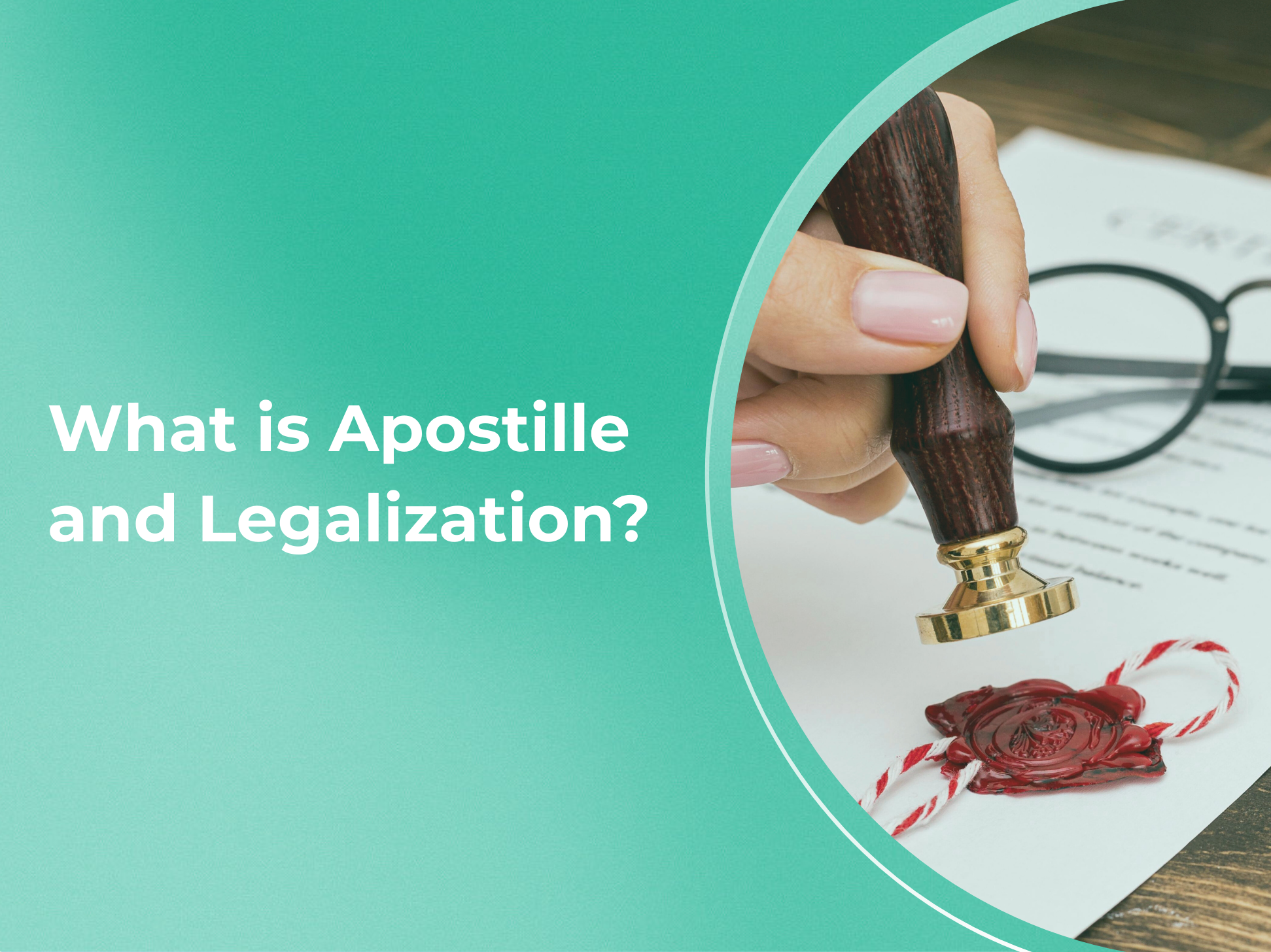
An apostille is a special type of certification that verifies the authenticity of a document issued in one country so it can be recognized in another. It is part of the 1961 Hague Convention, which simplifies the process of document authentication between member countries.
When is it used?
Apostilles are used for documents from countries that are members of the Hague Convention. They are typically required for official, government-issued documents such as: birth certificates, marriage certificates, and school or university diplomas.
The apostille confirms that the document is genuine and can be accepted in another member country without further authentication.
What is Legalization?
Legalization (sometimes called diplomatic legalization) is a process used to make a document issued in one country valid in another when the country is not part of the Hague Convention. It’s a more formal and multi-step procedure compared to an apostille.
When is it used?
Legalization is required for the same types of official documents — birth certificates, marriage certificates, diplomas, etc. — but the process involves two main steps:
- Certification by the Ministry of Foreign Affairs (or equivalent authority) in the country where the document was issued
- Authentication by the Spanish consulate or embassy responsible for that country
In other words, legalization ensures that Spanish authorities can trust the document even if your home country doesn’t participate in the Hague Convention.
What do I need for my documents?
Before you start the process, the first step is to check whether your country is part of the Hague Apostille Convention. You can find the full list here.
Depending on your country, you’ll need either an apostille (for Hague Convention members) or legalization (for non-member countries).
After the apostille/legalization step, you’ll also need a certified translation into Spanish by a traductor jurado (official sworn translator) to submit with your visa application.
Taking care of this step before you submit your application can save you a lot of time and prevent delays in the process.
Conclusion
The apostille or legalization of your public documents is a crucial step in the visa application process. Getting it right ensures your Spanish visa process goes smoothly. At Innolegals, we can guide you through every step to avoid delays — contact us today for expert support.
References
https://www.exteriores.gob.es/en/ServiciosAlCiudadano/Paginas/Legalizacion-y-apostilla.aspx
https://www.hcch.net/en/instruments/conventions/full-text/?cid=41
Dee Marasigan
Immigration specialist who guides English-speaking expats through Spain’s visa and residency requirements. She focuses on clear, practical advice to simplify the immigration process and help newcomers settle smoothly.
Don’t miss
Read More
June 10, 2026 · 4 min read
June 4, 2026 · 3 min read
Digital Nomad